Case study
AI Tooling.
I led development and operationalization of an AI-powered content design model to create content at scale.
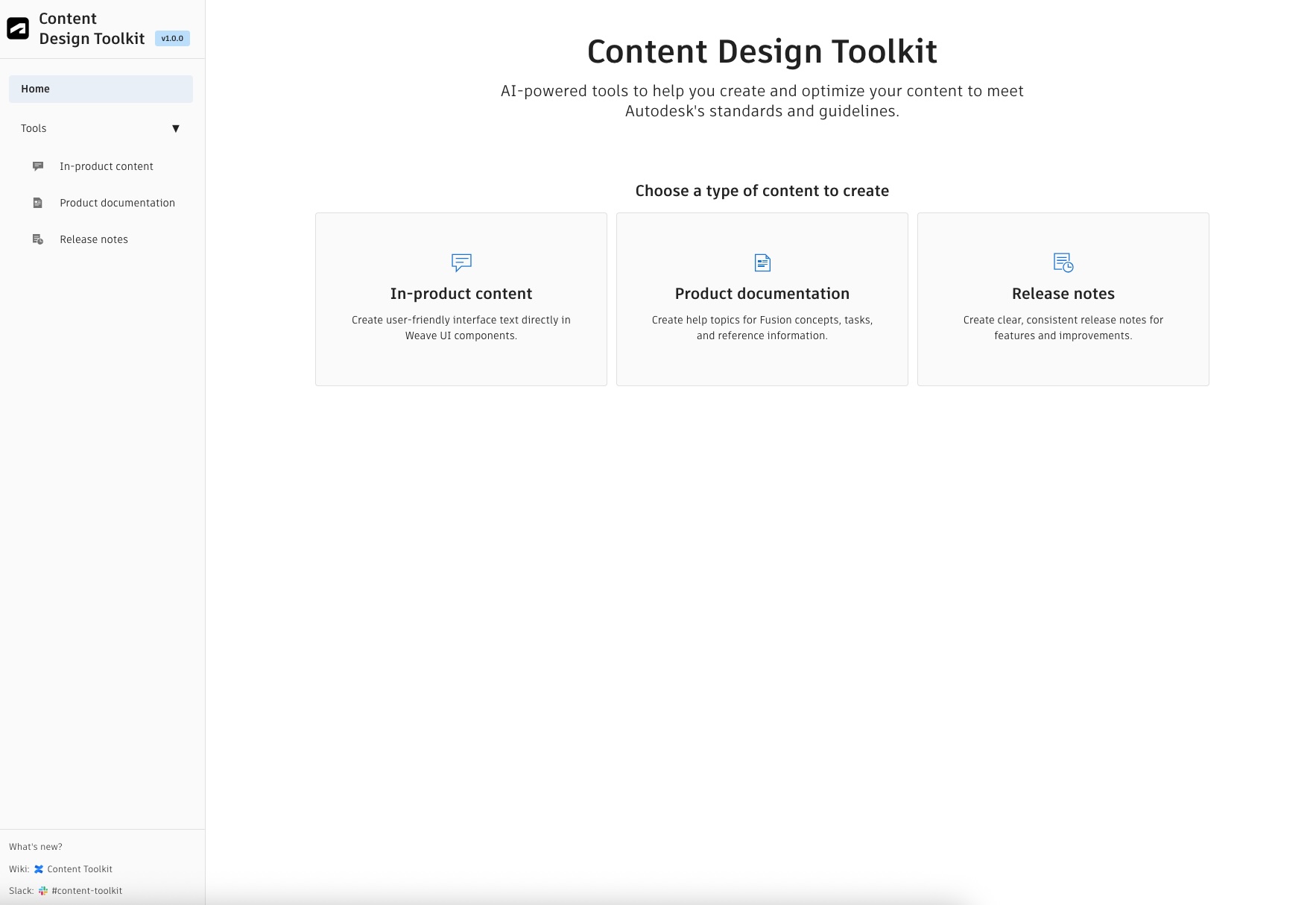
Situation
Content designers were stretched, leading to developers and designers creating their own, inconsistent content.
Problem for Autodesk
Content quality and style varied across products, making the experience feel uneven and hard to scale.
Problem for content creators
People lacked a simple, reliable way to create content that followed our guidelines, so work took longer and results were inconsistent.
Approach
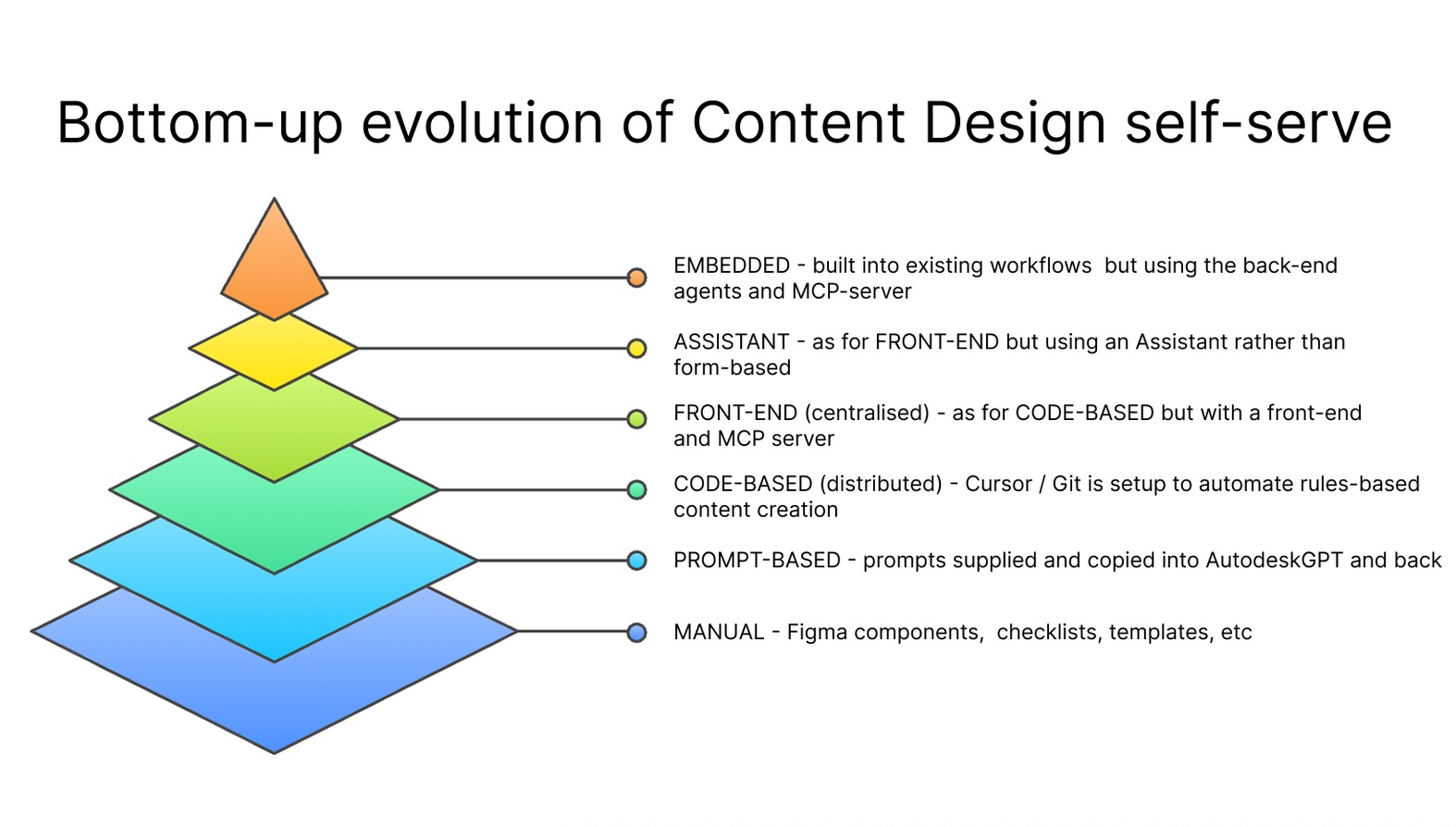
- Ran a proof of concept pilot with a standalone team
- Defined a simple, scalable architecture
- Prioritised features and improvements based on real team needs
- Ran user research to understand needs and build scalable onboarding approach
Solution and rationale
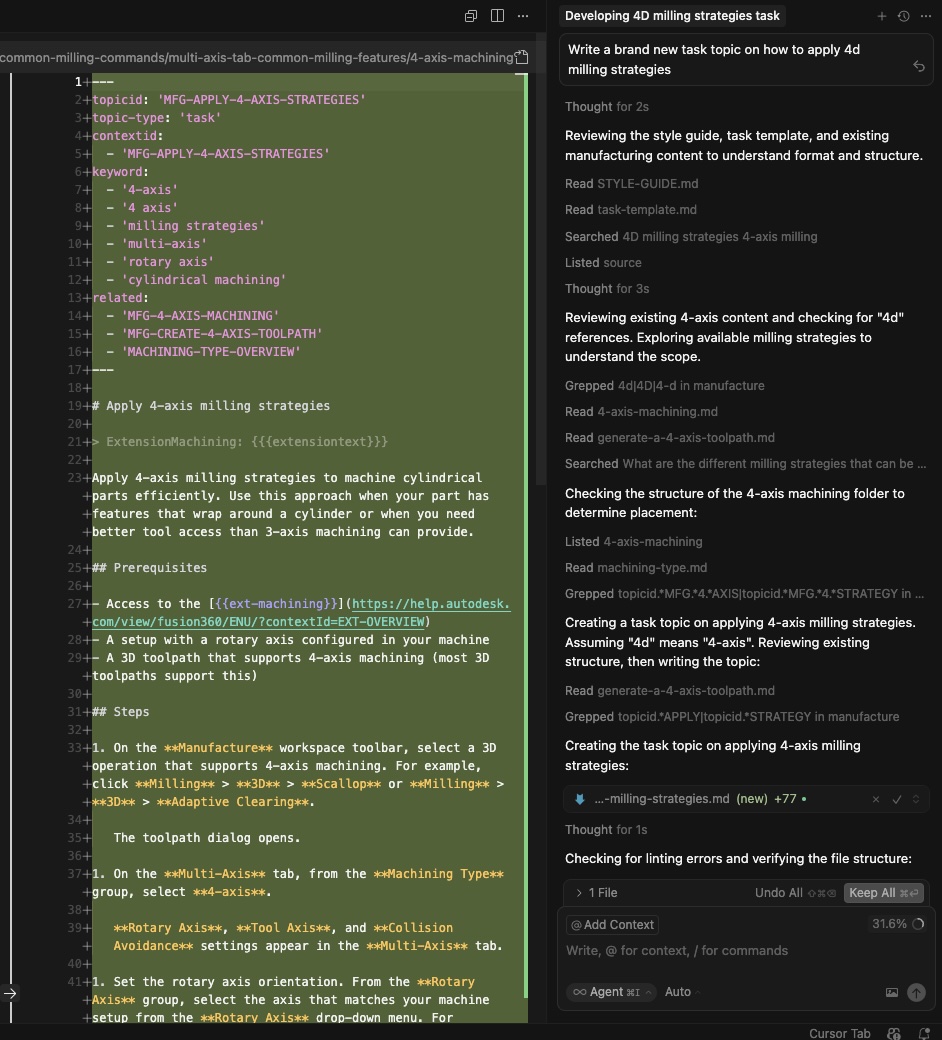
- Dual model approach with a Cursor-based workflow and a Toolkit app
- Integration with MCP-servers, shared rules, and examples
- AI outputs grounded in real Autodesk context
- Scheduled testing and reporting to maintain quality
What I learned
The prototype was the easy part.
I built the initial model and proved it through a pilot. The harder work was adoption: the operating model, onboarding and migration, and understanding where people trusted the tool and where they didn’t.
Organisational change is getting people to actually work differently.
Impact
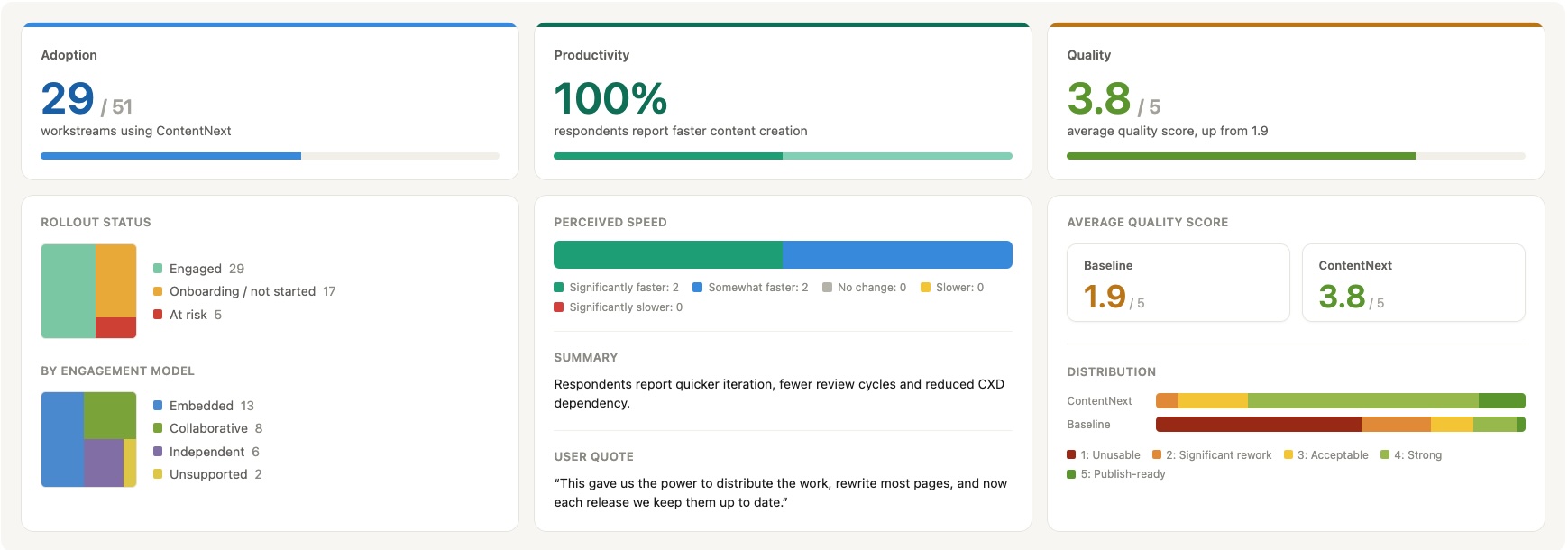
- Thirty teams using the Toolkit to self-support on content creation
- Tasks now take minutes instead of hours
- Automation of entire workflows
- Content quality improved